Passive Houses
High indoor comfort with minimal energy consumption.
Passive houses are extremely energy-efficient buildings that provide a high level of indoor comfort while consuming minimal energy. To obtain passive house certification, the selected windows must be energy-efficient and equipped with triple glazing with a Ug value of 0.5 W/m²K and a total heat transfer coefficient Uw ≤ 0.8 W/m²K. The lower this coefficient, the higher the thermal efficiency of the window. The performance of the ADF Smart window meets the requirements for passive houses.

Energy performance:
thermal transmittance up to Uw = 0.75 W/(m²K)
The ADF Smart window has a thermal transmittance coefficient of up to Uw = 0.75 W/(m²K). This coefficient defines the degree of heat transfer and therefore the thermal insulation performance of the window. Thermal transmittance quantifies the overall heat loss of the window. The lower the Uw value, the better the insulation and the higher the window’s performance.
Acoustic comfort:
sound insulation up to 47 dB
The ADF Smart window can provide sound insulation of up to 47 dB. The soundproofing level of a window is essential for reducing external noise and creating a quiet, comfortable indoor environment. This feature is measured in decibels (dB), with higher values indicating superior sound insulation. A well soundproofed window is crucial in urban areas or near major noise sources such as busy streets, railways, or airports.

Security:
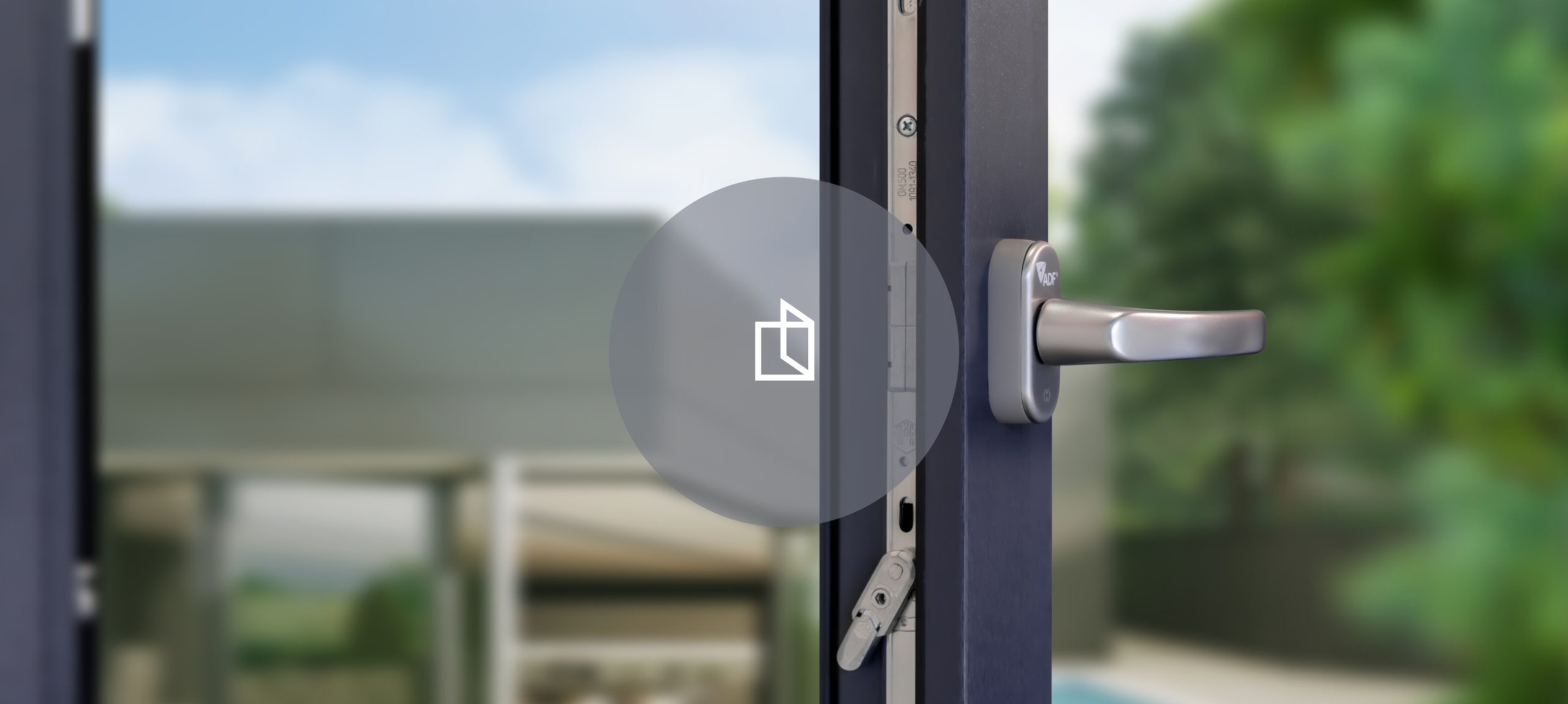
burglary protection up to RC 2
The ADF Smart window can provide burglary protection up to RC 2. This classification refers to the window’s ability to resist forced entry attempts according to European standards. An RC 2-rated window must withstand burglary attempts by an opportunistic intruder using simple tools such as screwdrivers, pliers, and wedges, for at least 3 minutes. The window is equipped with multiple anti-burglary locking points which, together with their distribution along the frame, ensure greater resistance against forced entry.
Triple or double insulating glazing
with DuraTherm warm spacer
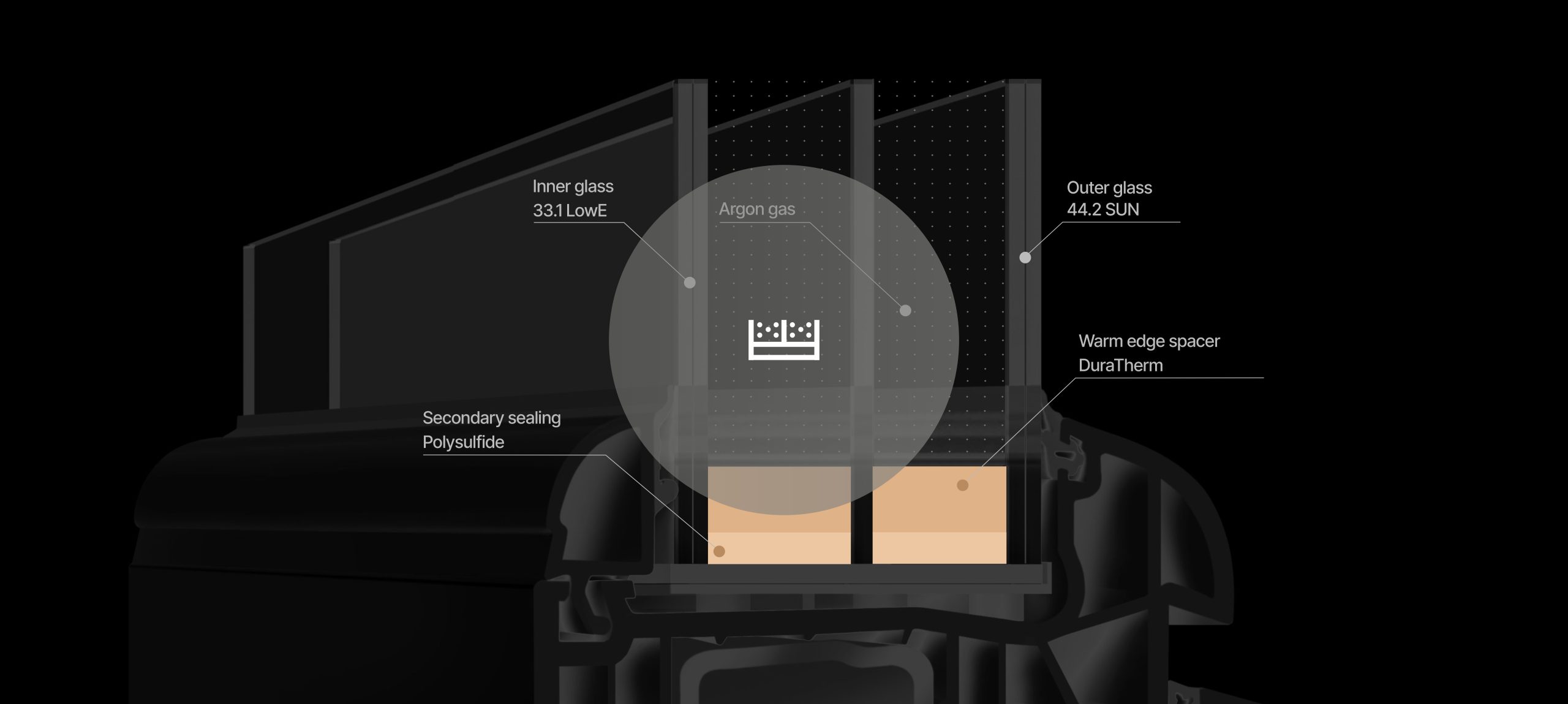
For the ADF Smart window, the glass unit thickness can be 52 / 48 mm (triple glazing) or 32 / 28 mm (double glazing). Since glass makes up about 80% of a window’s surface, the thermal and acoustic insulation properties largely depend on the quality of the glazing. Triple glazing consists of three panes of glass forming hermetically sealed chambers filled with inert gas (argon) and joined by a spacer bar. The spacer seals the unit and prevents heat transfer between inside and outside. Therefore, the spacer material must have the lowest possible thermal conductivity. ADF windows come standard with the DuraTherm “warm” spacer.
3 sealing gaskets.
Enhanced airtightness!
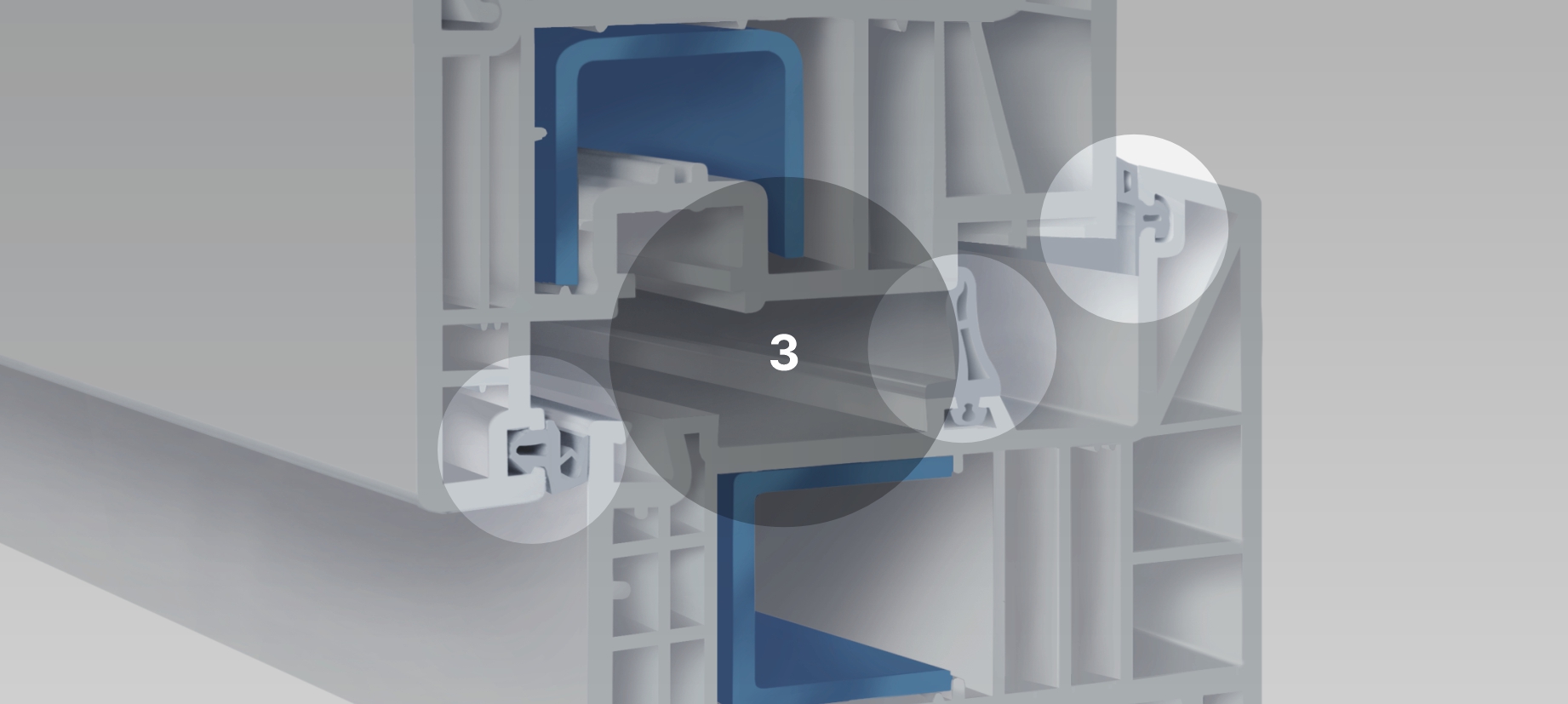
Sealing gaskets prevent air and water vapor from passing through the spaces between the sash and the frame. They help reduce heat loss through the windows, thereby improving the energy efficiency of the home (preventing unwanted heat transfer, keeping warmth inside during winter and cool air inside during summer). The ADF Smart window is designed with 3 sealing gaskets to ensure superior thermal insulation.
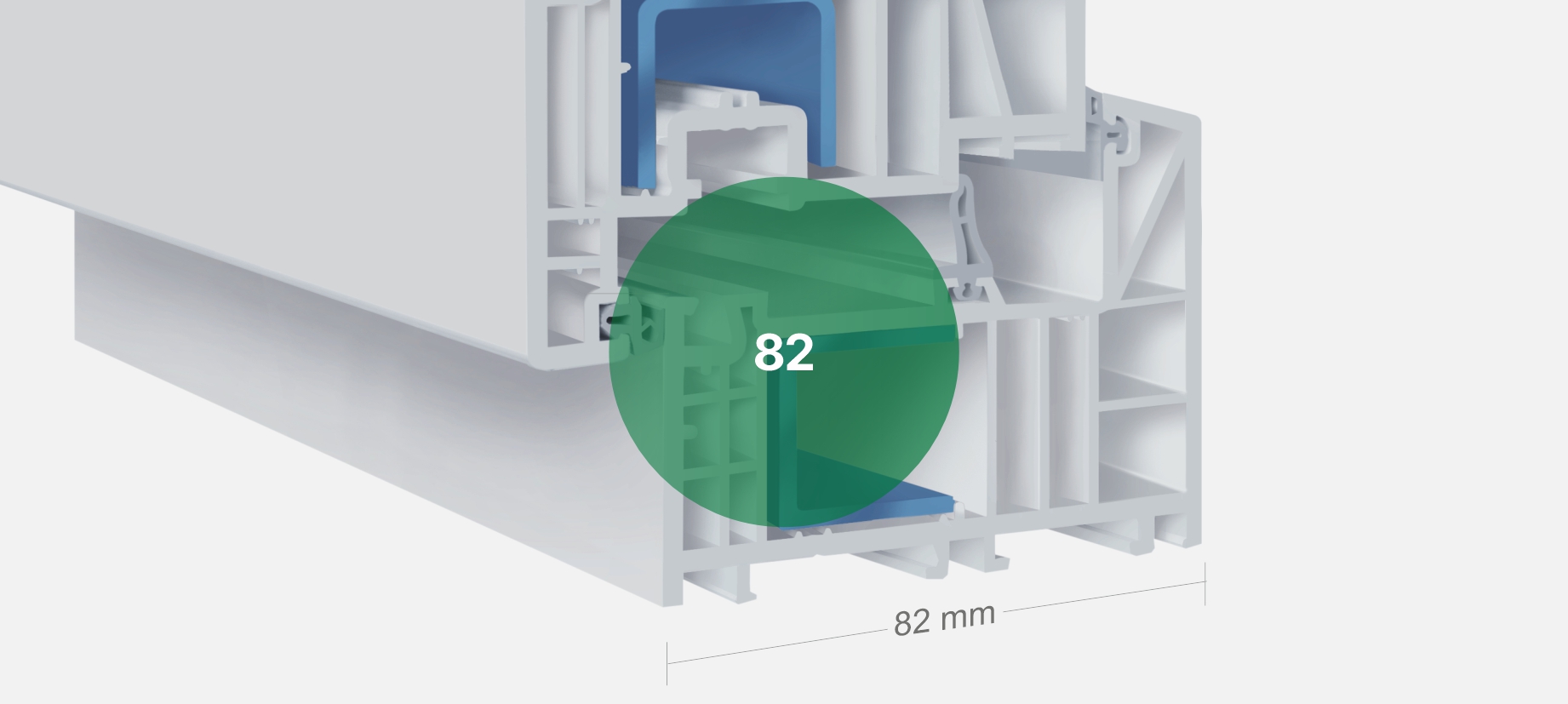
82 mm.
Large profile depth.
The 82 mm profile depth of the ADF Smart window represents the distance measured from the inside to the outside of the window frame. Also referred to as the window chassis, the profile depth is a visible element that directly impacts the window’s energy efficiency. A greater profile depth allows for the installation of a thicker glass unit, which enhances the thermal performance of the window.
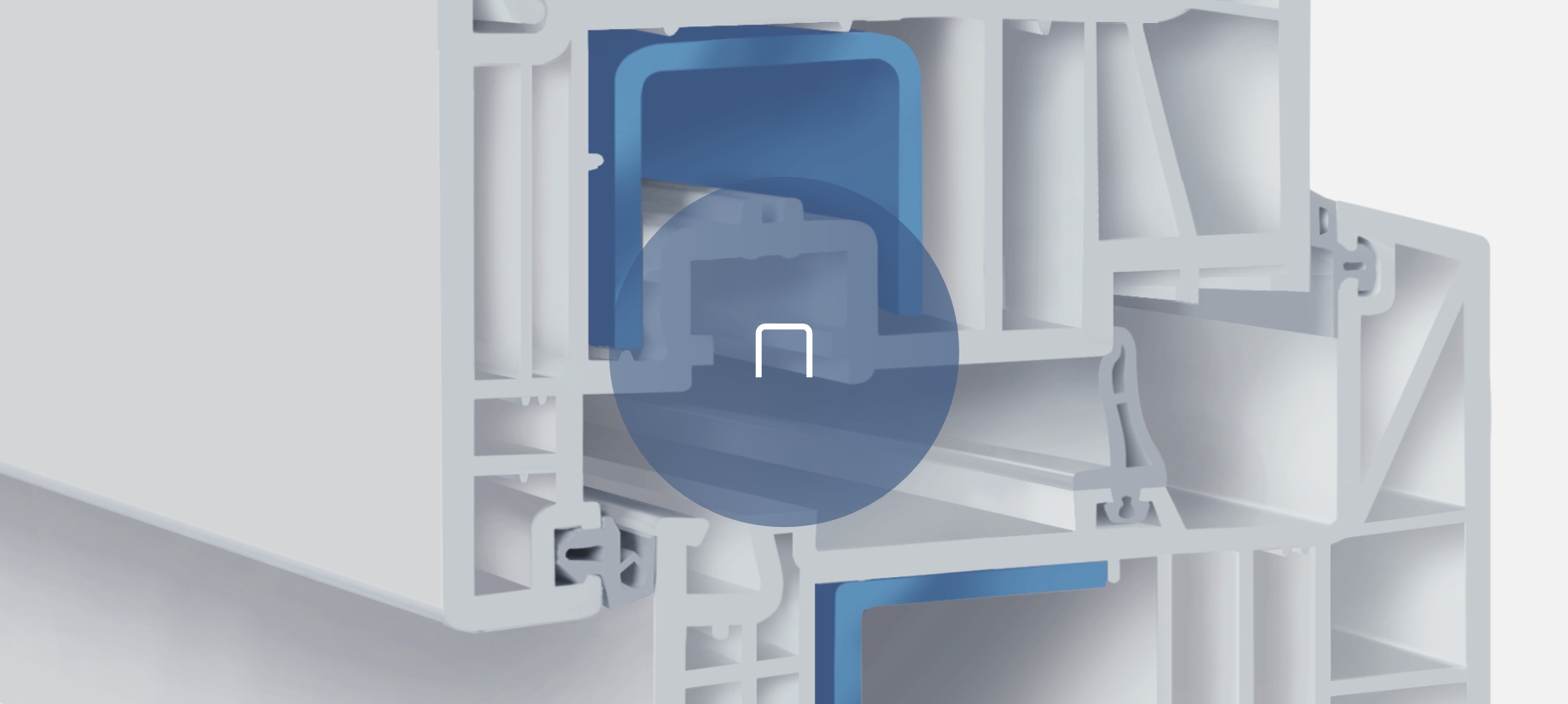
2 mm reinforcement.
Standard galvanized steel stiffening.
Reinforcement involves adding steel inserts into PVC profiles to stabilize them, giving the window superior strength. The reinforcement consists of a specially shaped galvanized steel profile inserted into the reinforcement chamber and fixed with self-tapping screws. For the ADF Smart window, we use 2 mm steel reinforcement as standard.